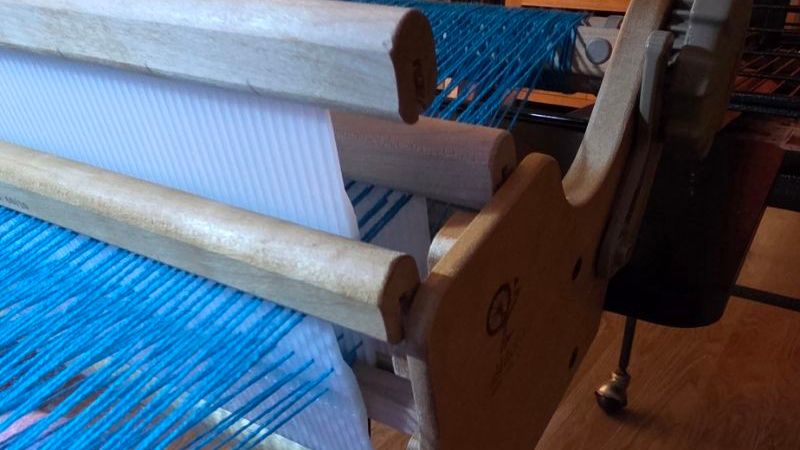
Details
Pattern:
Three-Heddle Straight-Draw (1-2-3-4) Sampler from Inventive Weaving on a Little Loom by Syne Mitchell
ISBN 978-1-60342-972-6
Patterns 1 to 6 below are the official samples in the book, but may include some reversal as indicated. 7 to 11 are me playing with combinations and/or reversals.
Loom:
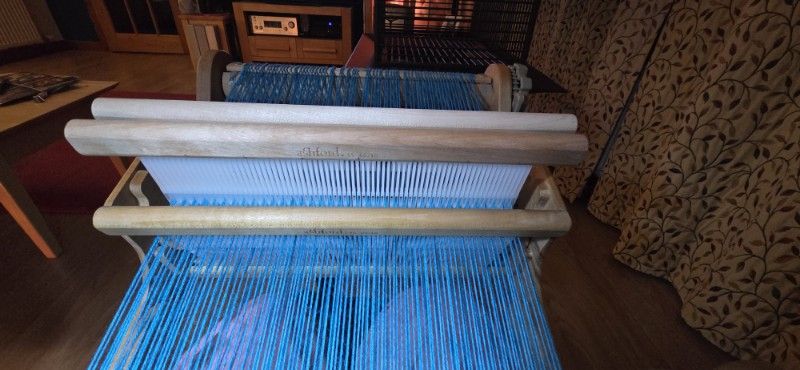
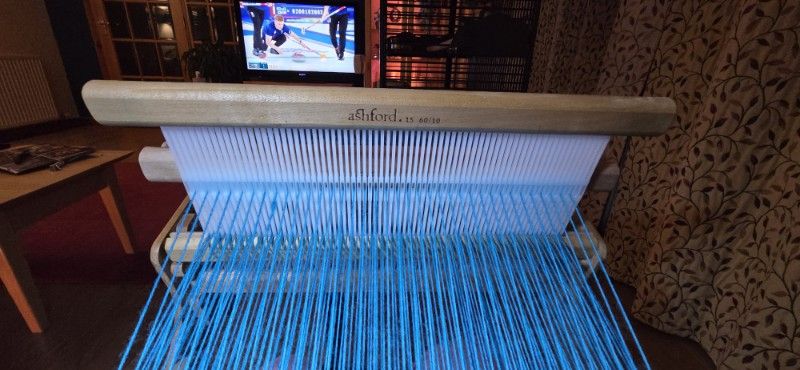
Ashford 10″ Sampleit with 3 x 15 dpi heddles.
Yarn:
Ripples Crafts Quinag 4 ply yarn in Turquoise Delight and The Dark Sea Storms (100% Bluefaced Leicester)
Timeline:
Started warping – 9th February 2026
Finished weaving – 16th February 2026
Weave Details
I warped about 2m, I forgot to measure it so this is the cut length.
1. Plain Weave – 24 rows between each section of twills 2 – 11.
Looks similar front and back.
No hanging selvedge needed.
Nice loose weave with drape.
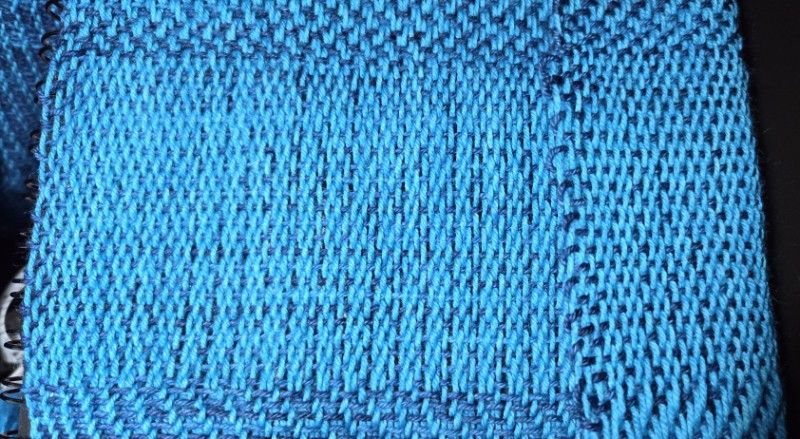
2. Weft-Faced Twill – 24 rows as per pattern and then reversed. In the book this pattern shows the angle in the opposite direction.
Looks very different front and back. Front (left) is weft facing but back is warp facing.
A hanging selvedge is needed.
Firmer thickness but softer feel than plain weave.
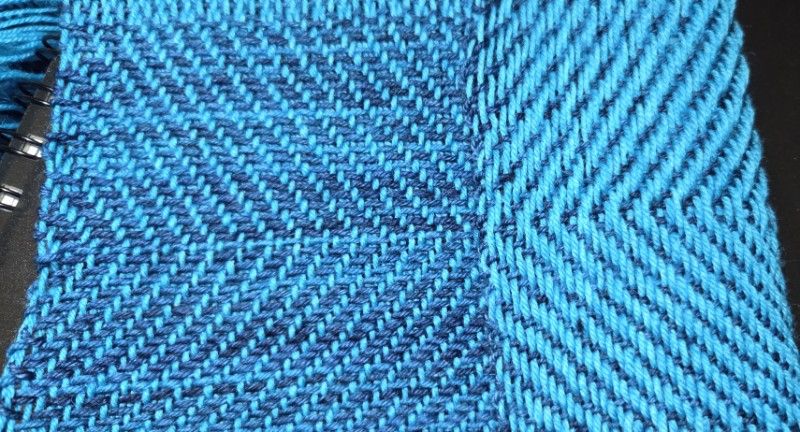
3. Vertical Skip Pattern – about 42 rows
Looks the same front and back.
A hanging selvedge would neaten the edges and avoid the need to catch threads.
Feel is between 1 and 2.
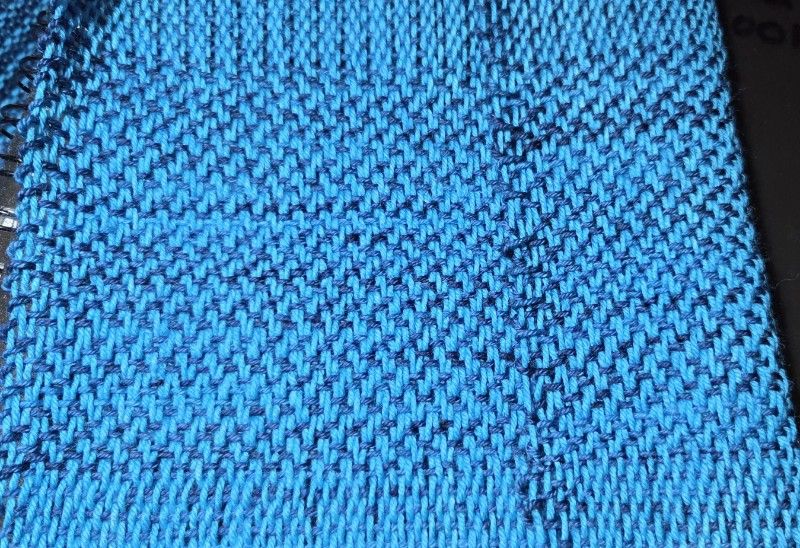
4. 2 x 2 Twill – 48 rows.
Looks the same front and back.
No hanging selvedge would be needed if going in one direction, would be if reversed.
Feel is softer than 3.
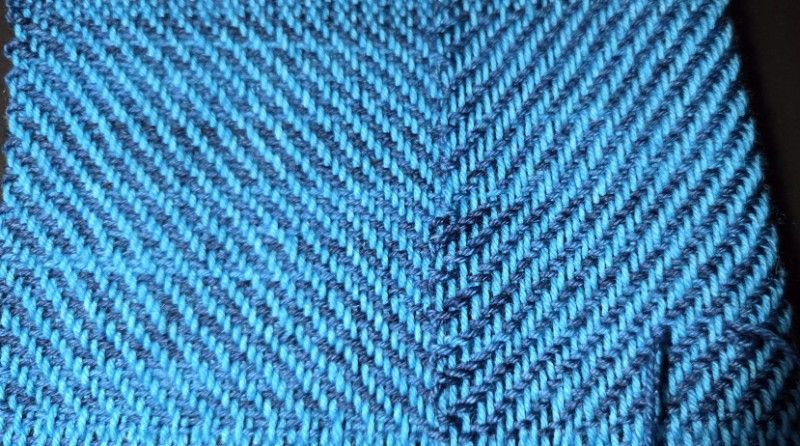
5. Zigzag Twill – 82 rows
Looks the same front and back.
Hanging selvedge needed.
Feels a lot more dense and no drape, would maybe suit as a place mat. I think I would use a 12.5 dpi reed if I tried this one again with 4 ply yarn.
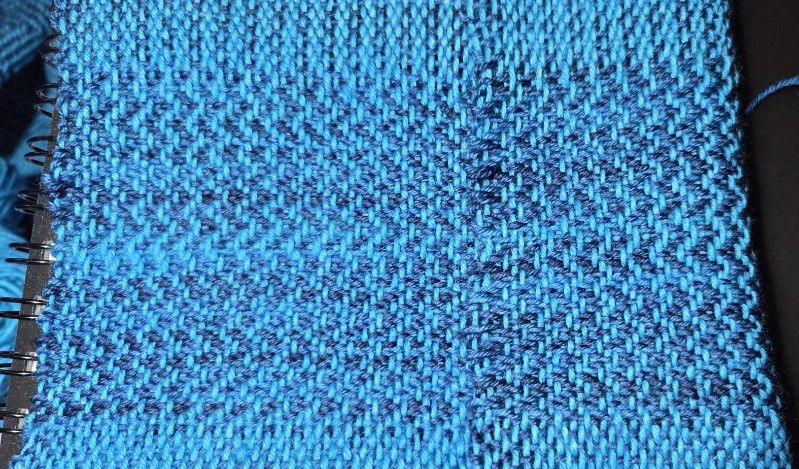
6. Cord Weave Twill – found this hard to remember the sequence. About 80 rows I think…this one is hard to count too.
Same front and back.
Hanging selvedge needed.
Similar to 5 this is quite dense and would suit a placemat.
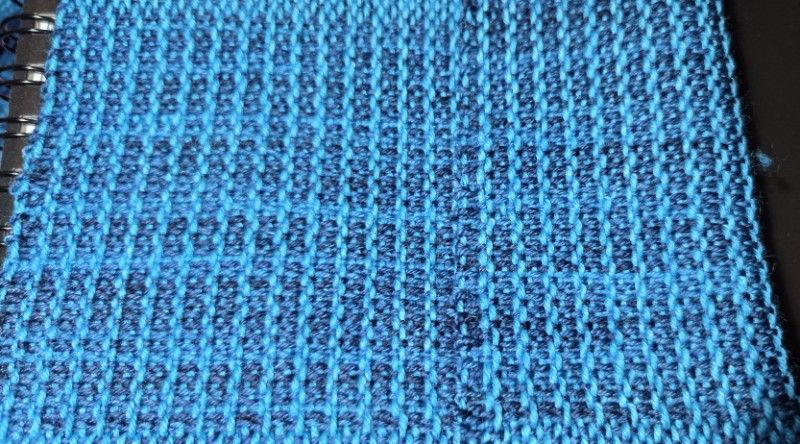
These other ones are just variations on the above. A hanging selvedge would be needed for most.
7. Weft-Faced Twill – 8 rows then 8 reversed. Feels petty firm and was hard to stop the edges pulling in. Slightly prefer the reverse side.
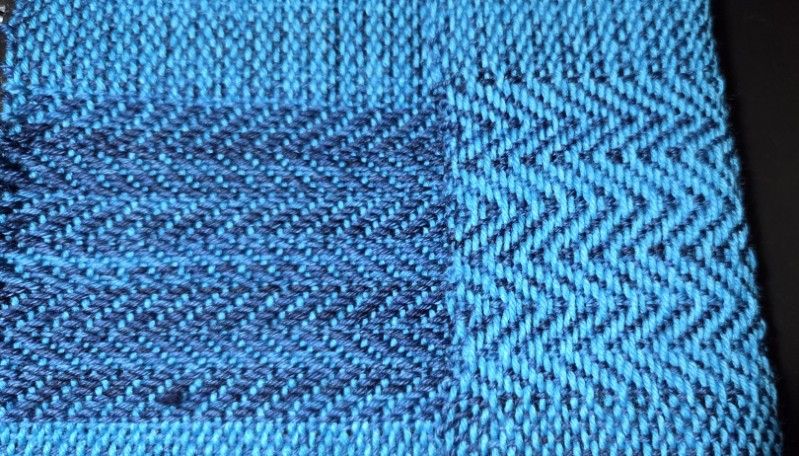
8. 2 x 2 Twill with plain weave – 8 rows of 2 x 2 then reversed and some plain rows separating the chevrons
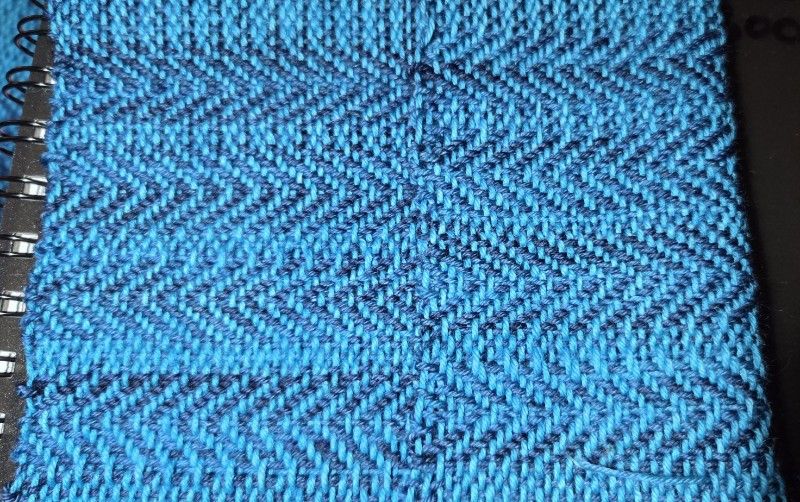
9. 2 x 2 Twill with Weft-Faced Twill – 8 rows of 2 x 2 twill then 8 rows of reversed weft facing twill then reversed.
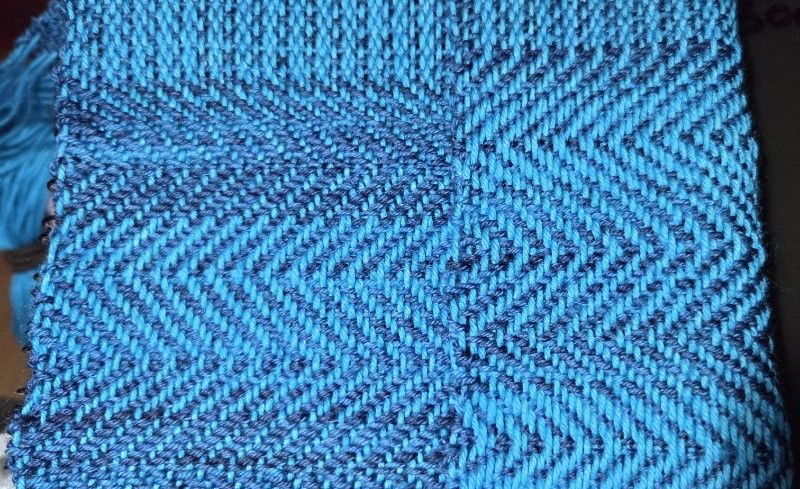
10. Patterns 2-6 in order and reverse – two repeats of each – weft faced twill, vertical Skip, 2 x 2 twill, zigzag Twill, cord weave and then reversed
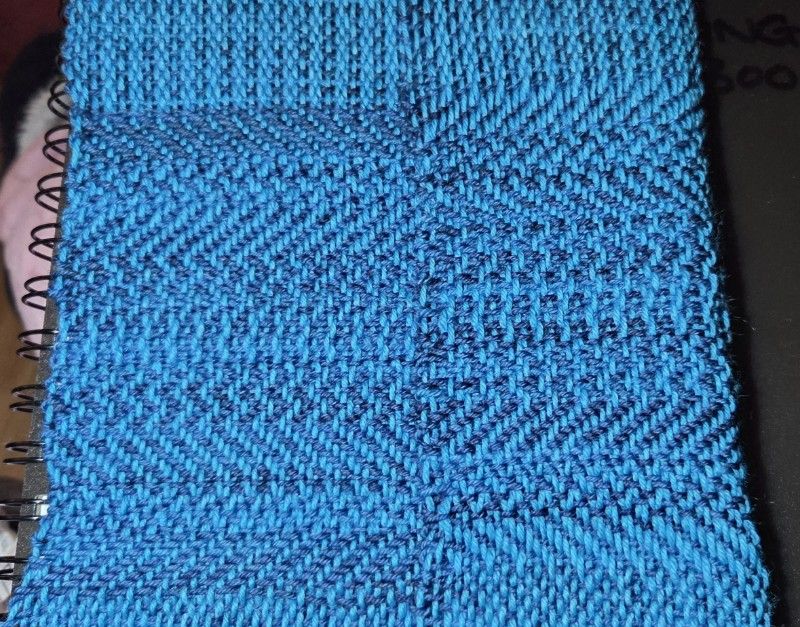
11. Zigzag Twill with 2 x 2 Twill –
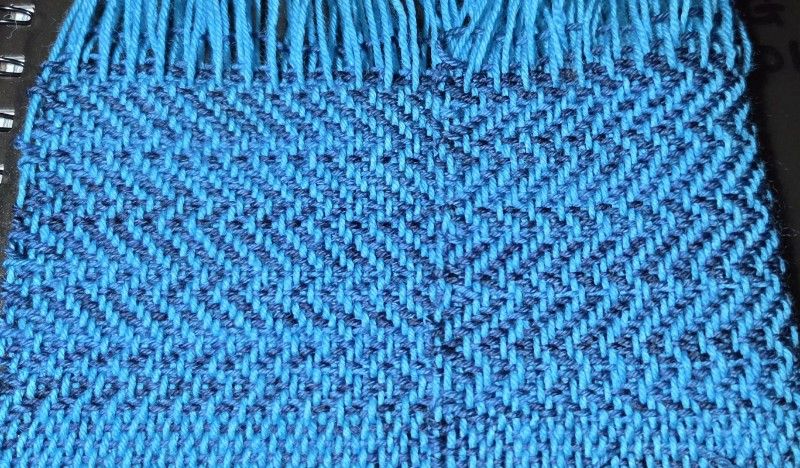
How was it using 3 heddles
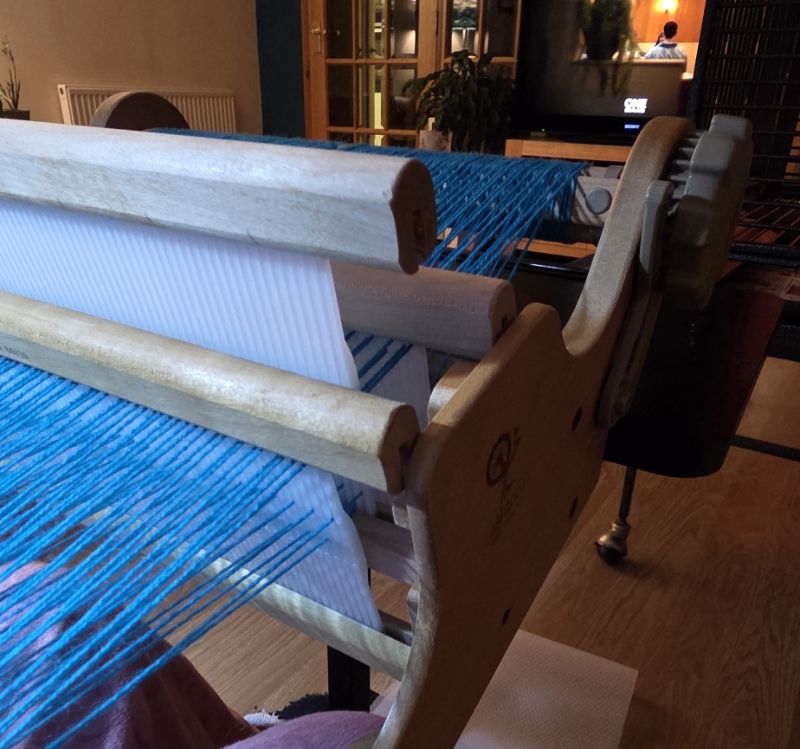
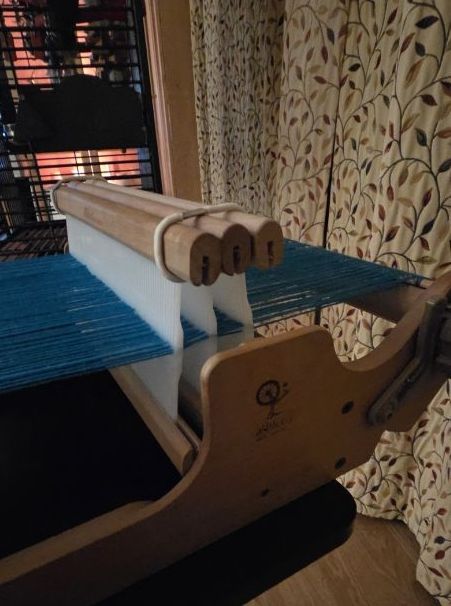
My Ashford Sampleit has a double heddle block and I put heddle 3 on the rear, heddle 2 on the front and heddle 1 was floating in the front. This is definitely the best way to work it, as there is a perfect size space to lower heddle 1.
I should have added a hanging selvedge thread on each side because this would have neatened the edge where some of the patterns weren’t capturing the outside thread.
Overall I really enjoyed it as an exercise. Its been interesting feeling the difference in the different sections and how the twills affect the drape and feel.
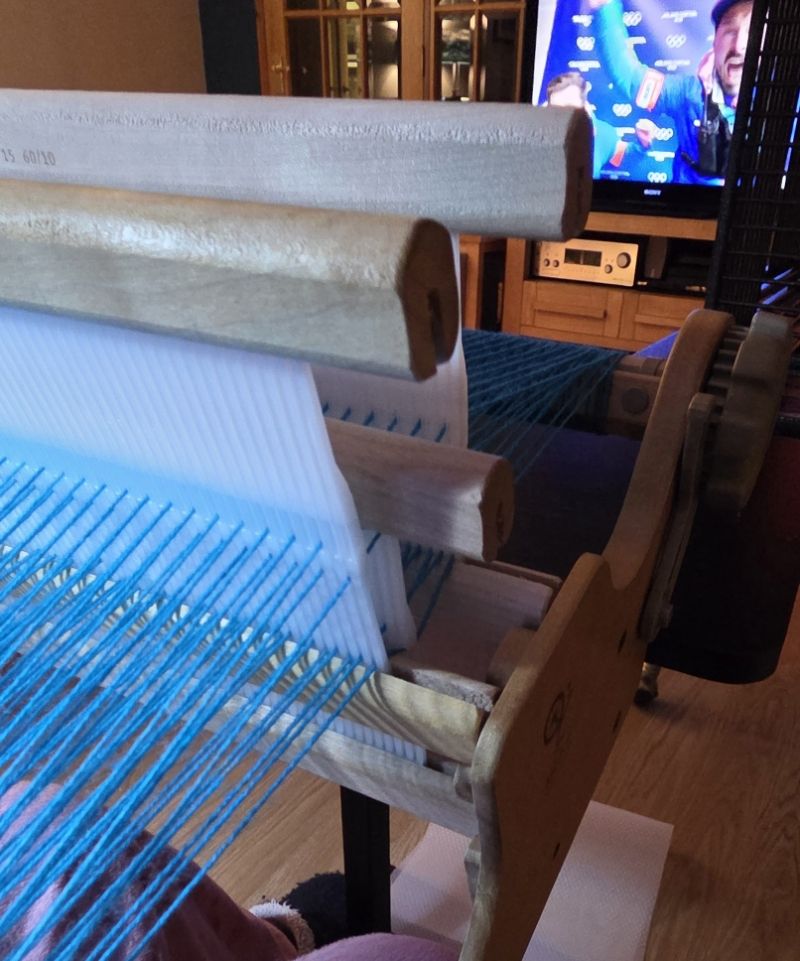
I did this whole project without owning a bobbin winder, so I was manually filling the bobbins by hand. Although I got to be quite the expert at neatly doing it, I have now ordered a Glimakra bobbin winder for my next project!
 HighlandHeffalump
I’m completely lost on the technical side of this post, but I appreciate all the beautiful fabrics you’ve created, Liz. Your experiments are fascinating and admirable.
LikeLiked by 1 person
I love to watch weaving but putting all that fiber on to weave would drive me crazy! Your weaving looks very good :).
LikeLiked by 1 person
[…] cut off the loom and I have twisted the fringe using my fringe twister gadget. I did publish a post with all the finished sections showing front and back. Here is a photo of it laid out front side […]
LikeLike
That all looks so intricate and fascinating! Thanks for sharing all your samples and the differences you noticed in the different weaves!
LikeLiked by 1 person
[…] at least one 3 heddle project on my 10” Sampleit ↪️YOP14 🏁wk34 Three heddle sampler from Inventing Weaving […]
LikeLike